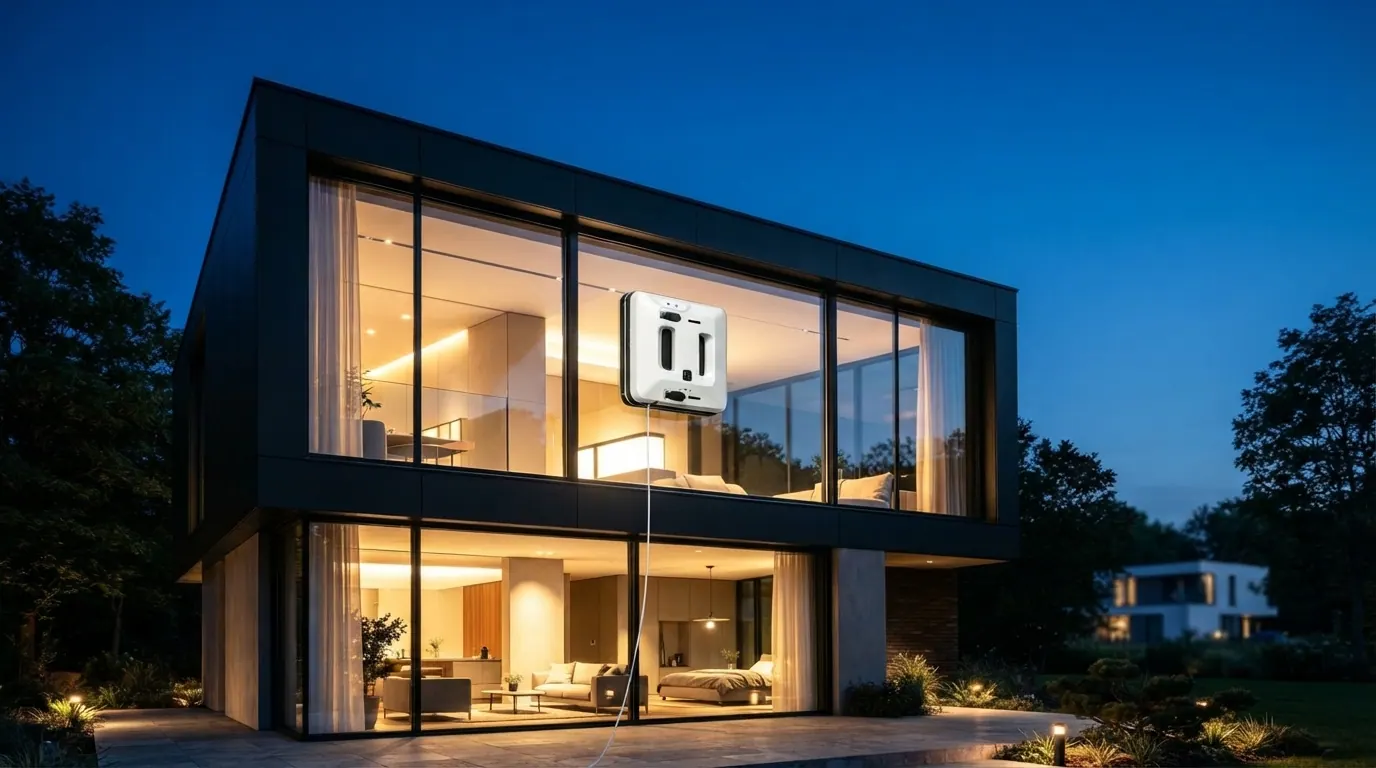
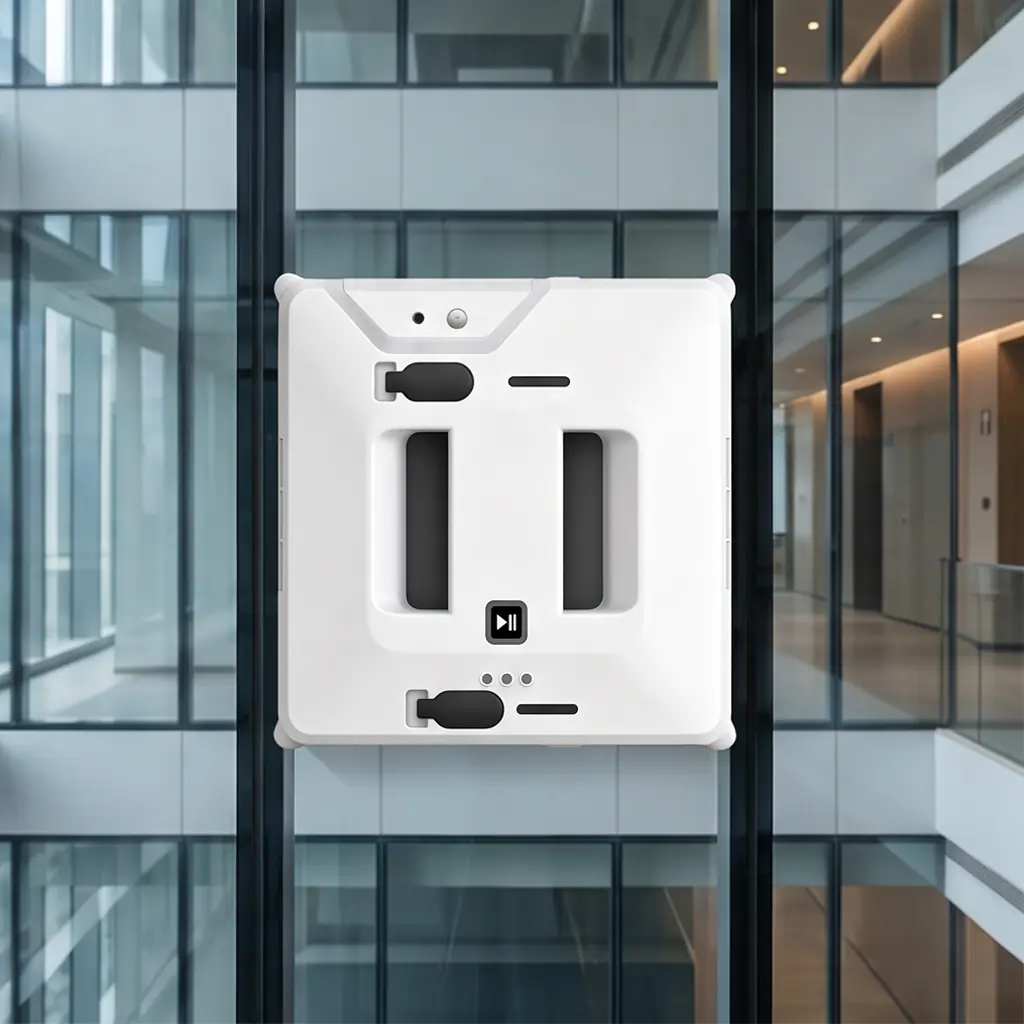
For homeowners and property managers across the US and Europe, a Round Window Cleaning Robot offers a reliable solution for high-rise window cleaning, which has always been a costly and risky chore. In the US, urban high-rise apartments, commercial office towers and skyscraper curtain walls demand reliable window cleaning solutions; across the EU, compact rectangular apartment windows, office grid glass facades and strict residential safety regulations raise higher requirements for window robots.
For years, round window cleaning robots dominated global e-commerce and Google search results, favored for flexible steering for small glass areas. But this square window cleaning robot (shown in the picture) has quickly gained traction in EU & US commercial and high-end residential markets.
In this guide tailored for Google search users in North America and Europe, we break down head-to-head differences between square and mainstream round robots, sort out regional user pain points, and help overseas buyers make a data-backed purchase decision aligned with local housing scenarios.
1.Head-to-head Comparison: Square VS Mainstream Round Window Cleaning Robot Go to the official website
1.1 Edge Cleaning Capability
Mainstream Round Robot Defect :Round curved body cannot fit flush with straight window frames widely used in EU apartments and US office curtain walls. It leaves a 3-5cm uncleaned dead zone on four edges. Even premium round models with edge sensors cannot eliminate blind spots completely.
Regional Trouble: EU apartments mostly adopt standard rectangular fixed windows; US office buildings use grid curtain walls. Users still need ladders for edge touch-up cleaning, violating local high-altitude operation safety codes in EU countries like Germany, France and the UK, and bringing fall risks for US high-rise residents.
Square Robot Advantage
Right-angle square body perfectly matches standard rectangular glass geometry adopted in 90% of EU residential windows and US commercial curtain walls. Four straight sides closely attach to window borders during operation, realizing full edge-center one-pass cleaning with zero blind spots. It complies with EU residential safety rules and avoids secondary ladder work required by round robots.
1.2 Large-area Cleaning Efficiency
Round Robot Drawback:Small single circular wiping coverage leads to repeated back-and-forth routes on large curtain walls and full-size floor-to-ceiling windows. For a single office floor curtain wall in New York, Chicago or London, round robots take nearly double the working time of square models, raising labor and time costs for property service companies.
Square Robot Advantage:Built-in rectangular grid path algorithm matches the modular design of US/EU office curtain walls and large household floor-to-ceiling windows. It reduces redundant moving routes and improves large-area cleaning efficiency by 30%. For US property management firms and EU commercial cleaning service providers, it cuts cleaning cycle time and boosts project profitability.
1.3 Wind Resistance & Adsorption Stability
Round Robot Weakness:Most round robots adopt central concentrated negative pressure adsorption. Coastal cities in the US (Miami, Seattle) and windy EU regions (Netherlands, Northern UK) face strong outdoor crosswinds; round bodies bear uneven wind force, causing obvious shaking and position deviation. High-floor users search frequently for “window robot fall risk” on Google, and round robots cannot meet the stability demand.
Square Robot Strength:Whole-bottom uniform negative pressure layout disperses wind pressure evenly across the base. Under equal suction parameters, anti-shake and wind resistance far exceed round models. Equipped with standard certified safety lanyard and UPS emergency power supply (meets EU CE safety certification & US FCC certification), it stably operates unattended on 20+ floor exterior windows, solving the top safety concern of overseas high-rise users.
1.4 Regional Scene Adaptation Difference
Mainstream Round Robot
✅ Strengths: Lightweight, ultra-flexible steering, fit small scattered glass: EU bathroom mirrors, small bay windows in US villas, curved sunroom glass widely seen in Southern Europe (Spain, Italy).
❌ Weaknesses: Poor performance on continuous large rectangular curtain walls; prominent edge residue, low efficiency for bulk commercial cleaning projects, not suitable for mainstream large glass scenarios of US/EU commercial clients.
Square Robot
✅ Strengths: Optimized for standard rectangular glass scenarios: US downtown office curtain walls, EU large apartment floor-to-ceiling windows, high-rise exterior glass in windy coastal cities. Stable operation, full coverage, high batch cleaning efficiency, fully meets the core demand of Google high-search-volume keywords: commercial window cleaning robot, high rise window robot.
❌ Weaknesses: Slightly larger body, not fit ultra-narrow small mirrors and special curved glass for niche scenarios.
1.5 Intelligent Path Planning & Local Adaptation
Round Robot:Most mid-tier round robots use simple reciprocating paths, prone to missing areas on large standard glass, requiring multiple re-cleaning rounds, unable to adapt to standardized glass layout of US/EU office buildings.
Square Robot:Custom grid path algorithm identifies window size and frame position automatically, fits unified glass specifications of European and American buildings, delivers consistent cleaning effect, reduces manual intervention, and matches the intelligent operation demand of overseas property teams.
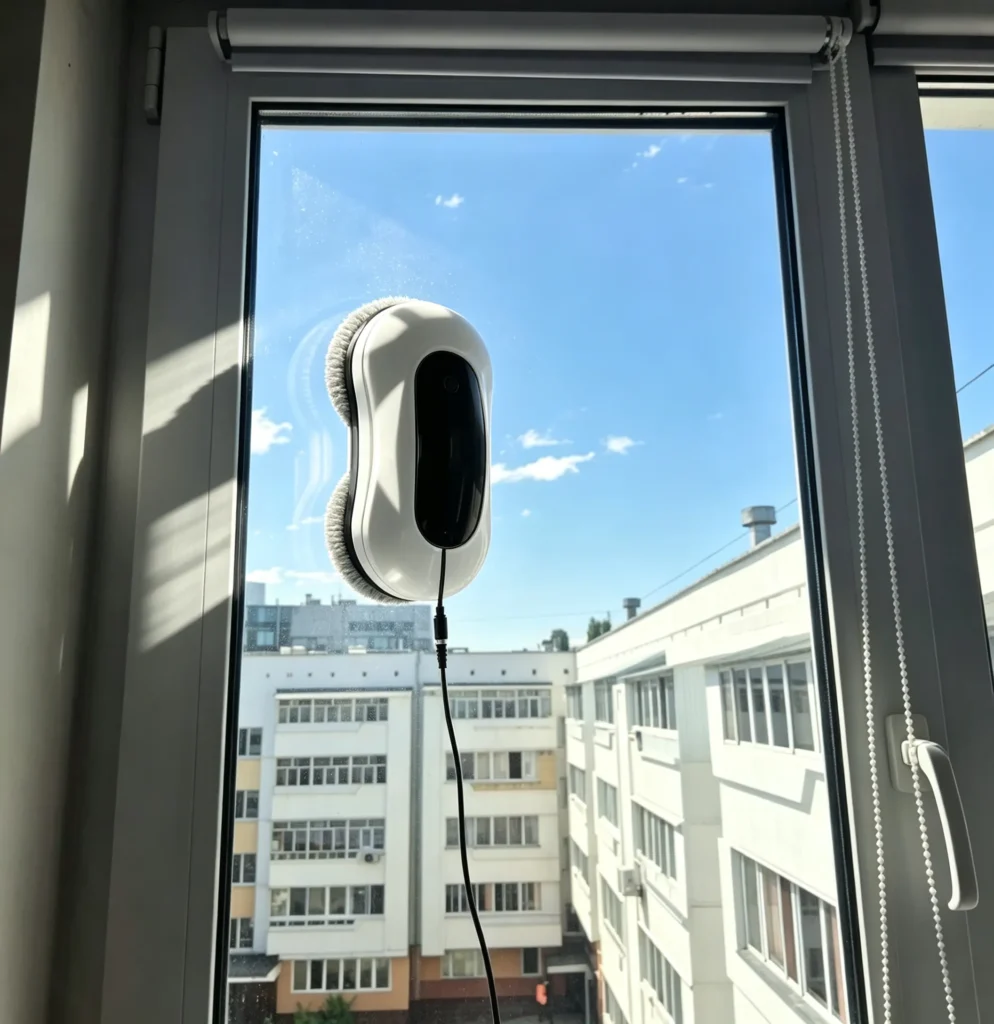
2.User Selection Pain Points & Targeted Solutions
Pain Point 1: EU apartment round robot leaves edge dirt, secondary ladder work violates local safety regulations.
window robots leave edge dirt EU, high rise ladder safety rule Germany
Solution: Square right-angle fit design completes edge cleaning synchronously, eliminates manual touch-up, fully complies with EU residential safety standards.
Pain Point 2: US property teams use round robots for curtain wall cleaning, low efficiency & high rework rate
commercial window cleaning robot efficiency US, office curtain wall cleaning cost
Solution: Square robot matches US office grid curtain wall layout, standardized grid path shortens cleaning cycles, unifies cleaning quality and reduces rework costs, favored by commercial property buyers.
Pain Point 3: Coastal US & Northern EU users worry round robots shake and fall in strong wind
window robot wind resistance coastal US, anti-fall window robot Europe
Solution: Square uniform pressure structure balances wind impact, with CE/FCC certified safety protection accessories, realizing safe unattended operation for high-rise exterior windows.
Pain Point 4: Mixed household scenes (large floor windows + small mirrors) confuse EU & US families
square vs round window robot for villa US, multi-scene window robot EU
Suggestion:
1.Core demand: US/EU high-rise large floor windows & exterior glass → Choose square robot as main equipment, match small handheld tools for a few small mirrors;
2.Core demand: Only scattered small glass (villa small side windows, bathroom mirrors) → Lightweight round robot is more suitable;
3.Most mixed-scenario families: Square robot solves the highest-frequency large windowpane point, small mirror workload can be manually assisted, more cost-effective than purchasing two robots separately.
Pain Point 5: Round robots trigger frequent edge sensor misjudgment on standard EU/US rectangular windows
window robot sensor error rectangular window EU
Core Reason: Square outline highly matches geometric logic of mainstream rectangular windows in Europe and the US, edge sensors identify frames accurately, greatly reducing misjudgment faults caused by outline mismatch.
3.Clear Selection Guide for EU & US Buyers
Choose This Square Window Cleaning Robot If You Meet The Following Scenarios
1.Have large rectangular floor-to-ceiling windows, US office curtain wall, EU commercial building continuous large glass cleaning demand (high Google search keyword: commercial window cleaning robot);
2.Live on the 15th floor or higher, coastal windy cities in the US / windy Northern EU regions, prioritize wind resistance stability and unattended safety;
3.Require full glass coverage without edge blind spots, refuse secondary manual cleaning, comply with EU residential safety rules;
4.Work for US property management companies, EU commercial cleaning teams needing efficient standardized large-area curtain wall cleaning.
Choose Traditional Round Window Robot If You Meet The Following Scenarios
1.Main cleaning targets: small-area glass such as EU bathroom mirrors, US villa small side windows, Southern Europe curved sunroom glass;
2.Live on floors below 10F, low wind influence areas in Europe and the US, only need basic automatic cleaning function;
3.No large floor-to-ceiling windows at home, only multiple scattered small glass surfaces to clean.
Final Conclusion
Square and round window cleaning robots have no absolute pros and cons, the core is matching regional housing scenarios in Europe and the US. Classic round robots still fit niche small scattered glass scenes with flexible steering demand. While this square window cleaning robot fixes the long-standing defects of mainstream round robots: edge blind zones, low large-area efficiency, insufficient wind resistance. It perfectly fits the mainstream rectangular window & commercial curtain wall demands of EU and US markets, becoming the top choice for overseas high-rise families and commercial property clients. When purchasing via Google search channels, do not blindly follow the mainstream round robot trend. Clarify local housing window type, floor height, regional wind environment and core pain points first, you can select the most suitable qualified window cleaning robot.