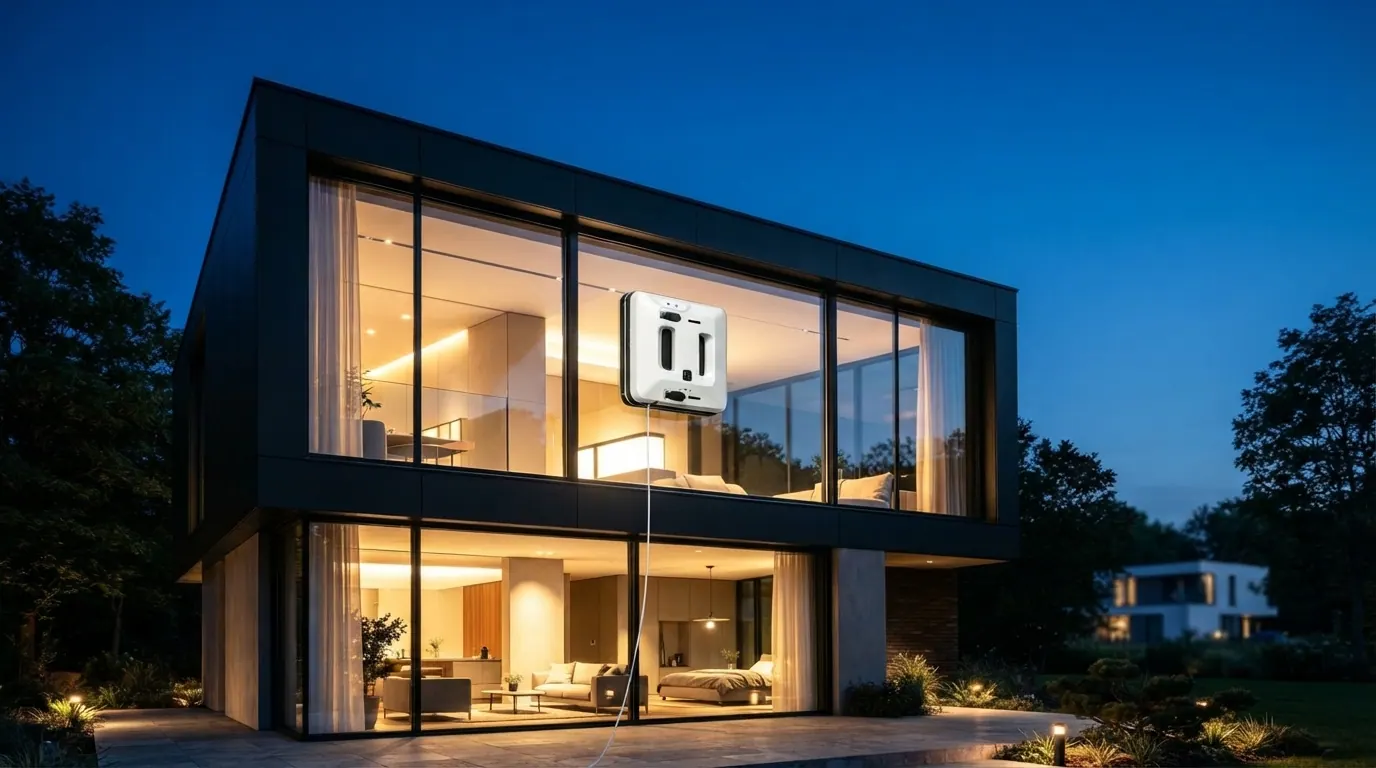
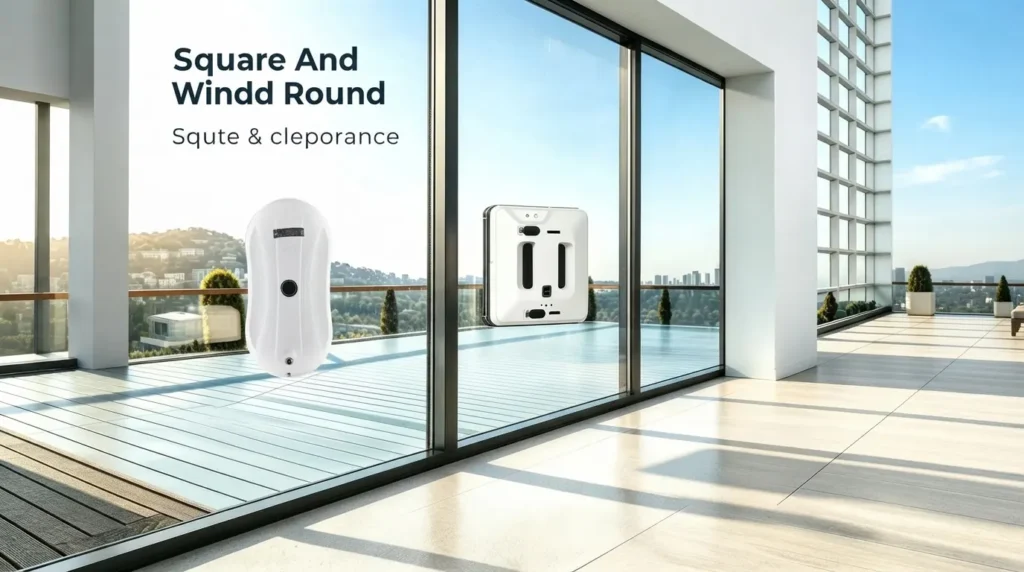
Trying to choose between square vs round window cleaning robots? Compare real cleaning performance, edge coverage, maneuverability, and home compatibility to pick the best automatic window cleaner.
When shopping for an automatic window cleaning robot, homeowners will always encounter two mainstream designs on the market: square window cleaning robots and round window cleaning robots. Both types rely on vacuum adsorption technology to cling to vertical glass and deliver hands-free cleaning. However, their body shapes lead to obvious differences in edge cleaning, corner coverage, movement flexibility, and overall cleaning efficiency.
Many buyers struggle to decide which version delivers better results. In fact, neither shape is universally superior. The ideal choice depends entirely on your home window types, glass structures, and daily cleaning priorities. To help you avoid wrong purchases, this guide thoroughly compares square and round window cleaning robots in real household scenarios.
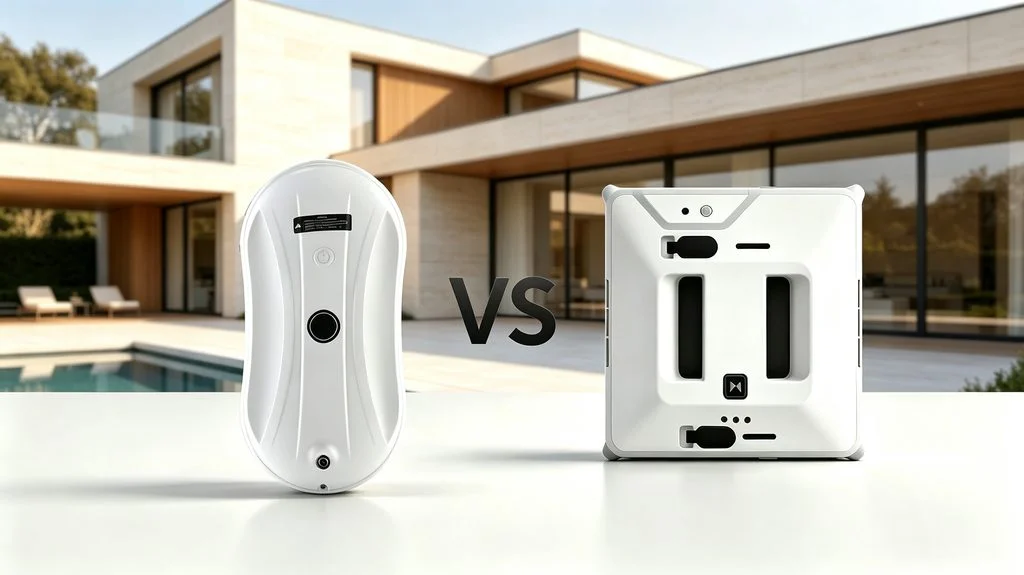
Basic Design Differences Between Square vs. Round Window Cleaning Robots
The core performance gap originates from structural design. Round window cleaning robots feature curved, streamlined bodies, while square window cleaning robots adopt angular, rectangular outlines optimized for standard window proportions. This simple difference reshapes their entire cleaning logic and adaptability.
Round Window Cleaning Robots: Classic Streamlined Design
Round models are the earlier, more mature design in the window robot industry. Their circular structure enables flexible rotation and smooth movement on large flat glass surfaces.
Key Advantages
- Excellent mobility: Round robots pivot and turn freely without stucking frequently. They navigate wide, open glass areas and bypass minor obstacles more smoothly.
- Even suction distribution: The circular contact surface disperses vacuum pressure evenly, ensuring stable adsorption on thin, smooth, or slightly curved flat glass.
- Perfect for large frameless glass: They excel at cleaning broad floor-to-ceiling glass, balcony glass walls, and shower glass panels with no dense frame barriers.
Visible Drawbacks
- Poor corner cleaning ability: Curved edges cannot fit closely into 90-degree window corners. They inevitably leave uncleaned narrow gaps at frame intersections, requiring manual touch-ups.
- Redundant cleaning paths: Since circles cannot perfectly fit rectangular window shapes, round robots need more repeated back-and-forth movements, slightly extending overall working time.
Square Window Cleaning Robots: Upgraded Structure for Household Windows
Square window cleaning robots are an upgraded version optimized for standard residential windows. Most home windows are rectangular with sharp right-angle corners, making square-structured robots more compatible with household cleaning demands.
Key Advantages
- Superior edge and corner coverage: The angular body fits tightly against straight window frames and reaches extremely close to 90-degree corners. It effectively eliminates corner dead zones that trouble round robots and manual cleaning.
- Higher cleaning efficiency: The rectangular shape matches regular window proportions, reducing repeated travel paths. It achieves higher full-area coverage in a single cleaning cycle.
- Great for framed multi-pane windows: Most apartment and villa windows have divided frames and dense corners, where square robots deliver far more thorough results.
Visible Drawbacks
- Limited rotation flexibility: Square bodies require more space to turn around. They are less flexible on extra-small or irregularly shaped glass.
- Higher requirement for sensor accuracy: Low-end square robots may bump into window frames without precise edge detection, though premium models solve this issue with upgraded sensors.
Real-Scenario Performance Comparison
1. Corner & Edge Cleaning (Square Wins)
For ordinary family windows with clear frames and right-angle corners, square window cleaning robots perform significantly better. They minimize residual dirt along edges and corners, achieving truly full-coverage cleaning. Round robots always leave subtle uncleaned blind spots at four corners, which greatly affects the overall cleaning finish.
2. Maneuverability & Flexibility (Round Wins)
On large-area frameless glass, round robots show stronger adaptability. They rotate and adjust directions freely without space restrictions, making them ideal for ultra-wide glass walls and shower enclosures. Square robots rely on sufficient blank space to rotate, limiting their performance on narrow glass sections.
3. Applicable Window Types
Choose Square Window Robots If You Have:
- Standard framed household windows
- Multi-layer partition glass windows
- Floor-to-ceiling windows with complete border frames
- High requirements for corner cleaning cleanliness
Choose Round Window Robots If You Have:
- Large frameless glass walls
- Balcony full glass partitions
- Bathroom shower glass screens
- Irregular wide flat glass surfaces
4. Safety & Suction Stability
It is worth noting that the robot’s shape does not determine safety performance. Both square and round window cleaning robots adopt mature vacuum adsorption and safety tether dual protection systems. Anti-fall ability depends on motor power, suction value, and body craftsmanship, not appearance. High-quality round robots can be safer than low-end square models, and vice versa.
Common Buying Misconceptions Debunked
Myth 1: Square robots are always better than round ones
Truth: Square robots excel at framed windows, but round models work more smoothly and efficiently on borderless large glass. The best choice varies by home environment.
Myth 2: Round robots cannot clean corners at all
Truth: Premium round robots adopt offset cleaning pad design to reduce blind spots. Yet they still cannot reach the precise corner cleaning effect of qualified square robots.
Myth 3: Shape decides suction power
Truth: Suction performance is determined by internal vacuum hardware and motor configuration. Buyers should prioritize core parameters rather than simply judging by shape.
Final Verdict: Which One Should You Choose?
For most ordinary families and apartment users, square window cleaning robots are the more practical option. They perfectly fit standard residential window structures, reduce manual touch-up work, and deliver cleaner overall results with higher efficiency.
For luxury villas, houses with large frameless glass or shower glass walls, round window cleaning robots provide smoother movement and more stable cleaning experience on open glass surfaces.
Ultimately, the best window cleaning robot is the one that matches your home’s actual glass conditions. By choosing the right shape for your windows, you can maximize cleaning effect, save time, and completely avoid the risks of manual window washing.