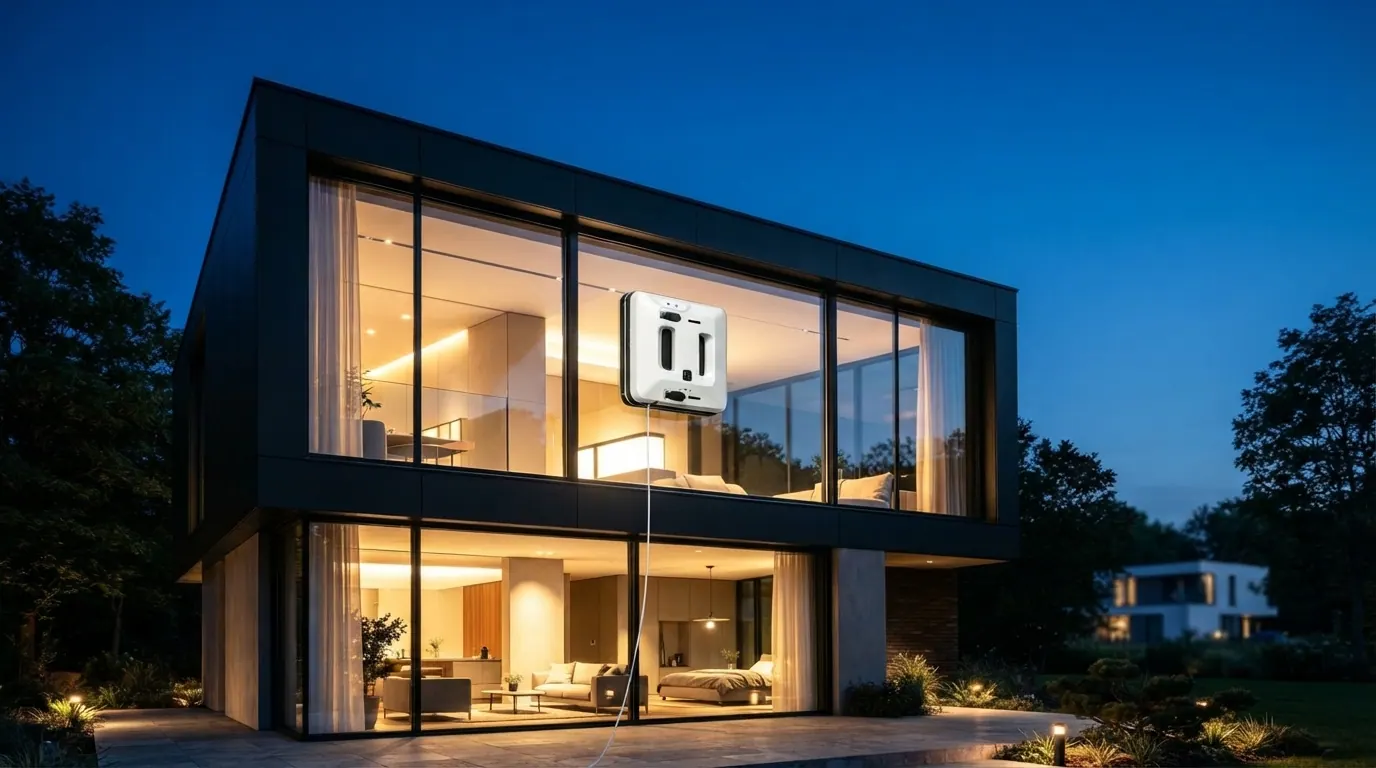
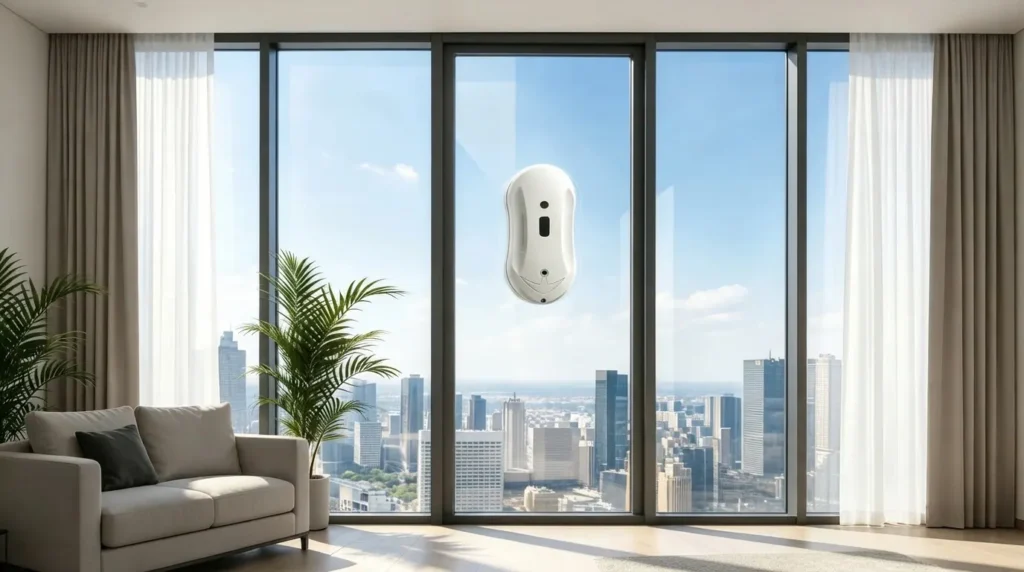
Cleaning windows is one of the most overlooked yet exhausting household chores. Window Cleaning Robots offer a safer solution for homeowners with floor-to-ceiling glass, high-rise windows, or hard-to-reach exterior panes. Traditional cleaning methods come with two major problems: safety risks and uneven results. Ladders, squeegees, and manual wiping often leave streaks, water spots, or even cause dangerous falls.
Window-cleaning robots have become a game-changing smart home solution in recent years. They eliminate manual labor, deliver streak-free glass, and make high-rise window maintenance safe and effortless. If you’re new to automatic window cleaners and wondering how they work, whether they’re worth buying, and how to pick the right model for your home, this complete homeowner’s guide will answer all your questions.
What Is a Window-Cleaning Robot?
A window-cleaning robot is a compact, intelligent home appliance designed to automatically clean flat glass surfaces, including interior and exterior windows, glass doors, shower screens, and balcony glass. Unlike floor robots, it features professional adsorption, navigation, and wet-dry cleaning systems specifically optimized for vertical glass surfaces.
Modern window robots are lightweight, portable, and fully automated. Once attached to glass, they plan cleaning paths independently, remove dust, stains, and water spots, and finish thorough cleaning with minimal human intervention. They are especially popular among modern homeowners with large glass windows, high-rise apartments, and busy schedules.
How Do Window-Cleaning Robots Work? Core Working Mechanism
Many homeowners hesitate to buy window robots simply because they don’t understand their working principle and worry about falling off or poor cleaning performance. In fact, today’s smart window-cleaning robots adopt mature, stable core technologies, with three key working systems supporting their entire operation. Go to the official website
1. Strong Vacuum Adsorption System (Anti-Fall Core)
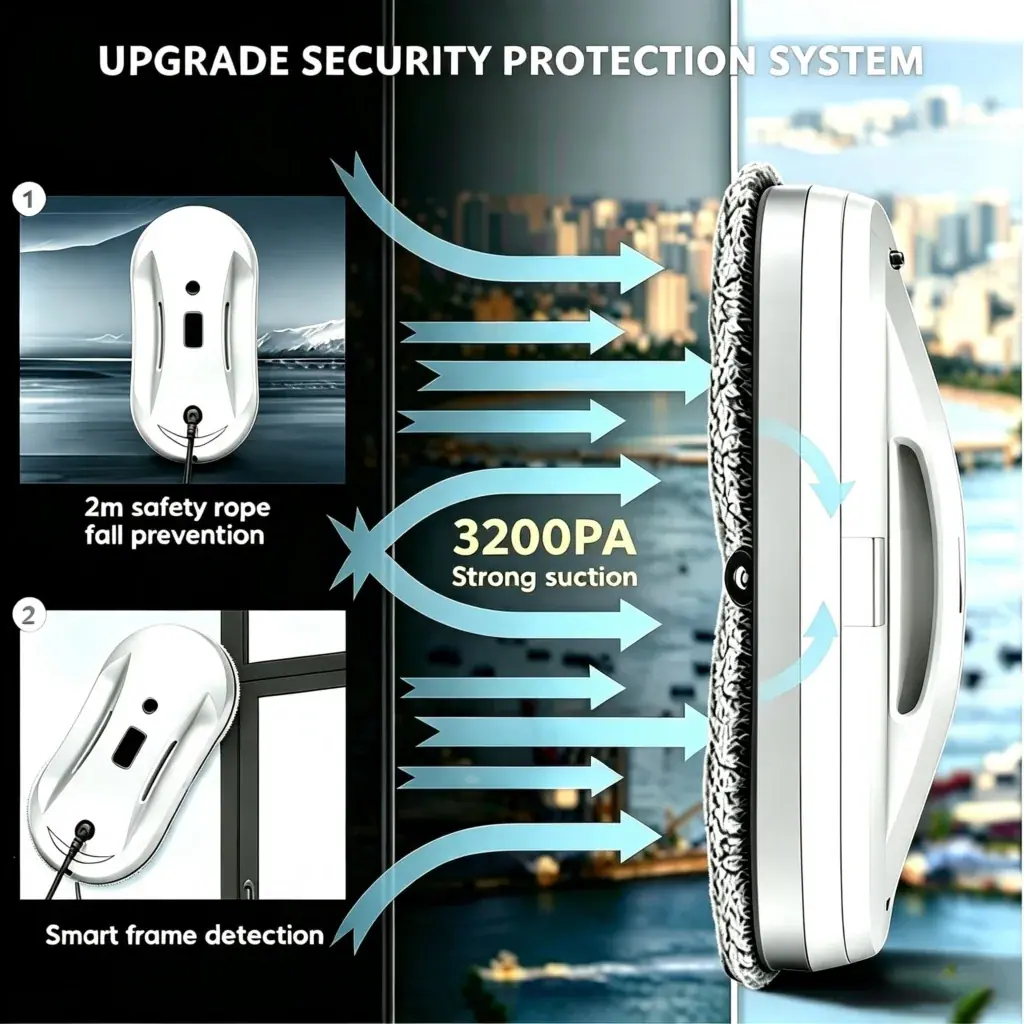
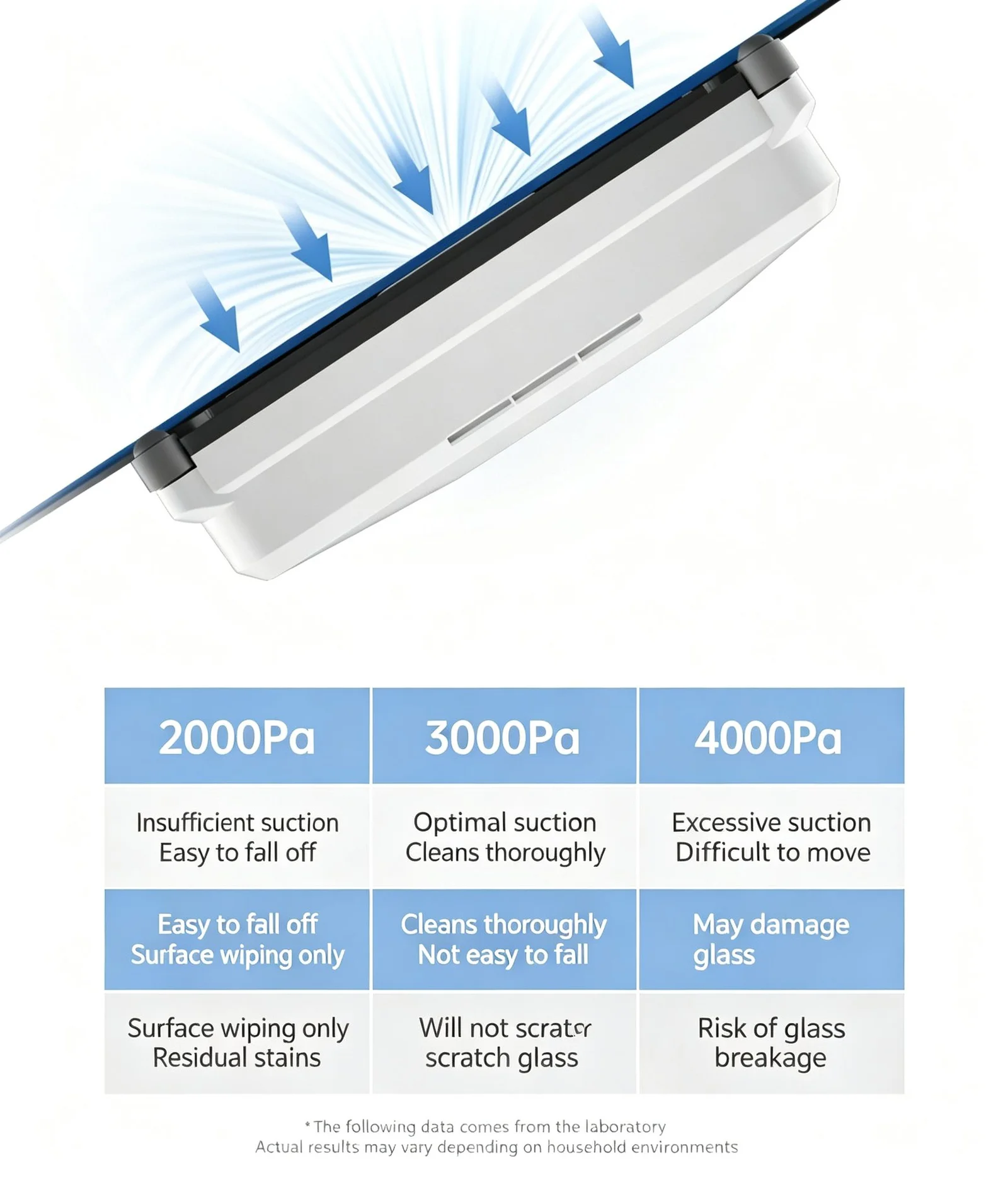
The most critical technology of window-cleaning robots is high-pressure vacuum adsorption. Equipped with high-torque brushless motors, the robot forms a stable air vacuum between its bottom and the glass surface, generating strong suction force to firmly adhere to vertical glass . Most qualified household models provide suction power above 2000Pa, which is enough to ensure stable operation even on smooth, dry glass.
Additionally, almost all formal models are equipped with safety tethers as a dual anti-fall guarantee. Even in extreme cases of power fluctuation or air pressure change, the safety rope can firmly fix the robot to prevent falling, completely solving homeowners’ safety concerns .
2. Intelligent Path Navigation & Edge Detection
Early window robots moved randomly with low cleaning coverage. Modern upgraded versions adopt intelligent sensor navigation systems. They can automatically identify window borders, frame edges, and obstacles through air pressure induction and infrared sensors .
After starting up, the robot first scans the window area, then plans a systematic cleaning route (usually top-to-bottom and left-to-right) to avoid repeated cleaning or missed areas. When detecting window edges, it will automatically reverse and adjust direction in 0.5 seconds, ensuring full coverage of corners and edges that are hard to clean manually .
3. Professional Wet & Dry Cleaning System
To simulate manual hand wiping and achieve spot-free cleaning, window robots adopt a scientific three-step cleaning process:
Step 1: Fine water spray / atomization — The built-in water tank sprays fine water mist or diluted cleaning solution to soften stubborn dust, fingerprints, and dried stains on the glass .
Step 2: Deep scrubbing — High-friction cleaning pads rotate or move orderly to wipe the glass surface thoroughly, removing dissolved dirt.
Step 3: Dry polishing — The dry wiping area removes residual water stains and water marks, leaving the glass bright, transparent, and streak-free.
Key Benefits of Owning a Window-Cleaning Robot for Homeowners
1. Eliminate High-Risk Cleaning Dangers
Cleaning exterior high-rise windows manually is one of the most dangerous household tasks. A window robot completely replaces manual high-altitude operation, allowing you to finish exterior window cleaning safely indoors without ladders or leaning out of windows.
2. Save Massive Time & Labor
Cleaning all household windows manually usually takes several hours and leaves your arms sore. A smart window robot works automatically with one-key start. You can arrange window cleaning while working, cooking, or resting, freeing you from tedious housework .
3. More Uniform & Thorough Cleaning Than Manual Work
Manual wiping is prone to uneven force, missed corners, and residual water streaks. The robot runs stably with constant pressure, covering every inch of the glass including edges and dead corners, delivering consistent professional cleaning results every time.
4. Wide Compatibility for Various Home Glass Scenarios
High-quality window-cleaning robots adapt to most household glass surfaces, including hollow windows, frameless glass, glass doors, shower glass, and balcony guardrail glass, meeting all-round household cleaning needs .
Complete Window-Cleaning Robot Buying Guide 2026 (For Homeowners)
Not all window robots on the market are suitable for household use. Many low-cost models have weak suction, poor edge cleaning, and unstable safety performance. Below are the 6 core purchasing criteria for ordinary homeowners, helping you avoid pitfalls.
1. Stable Suction Power & Anti-Fall Safety
Safety comes first. Prioritize models with suction power above 3000Pa and dual anti-fall protection (vacuum adsorption + safety tether) . Avoid cheap products with unknown suction parameters and no safety rope, which have huge falling risks. Meanwhile, check for formal safety certifications such as CE, FCC, and RoHS to ensure electrical and mechanical safety .
2. Intelligent Edge-Cleaning Ability
The biggest difference between high-quality and inferior window robots lies in edge cleaning. Excellent models support full edge recognition and close-range wiping without dead corners, while low-end products often leave uncleaned borders. For homes with framed windows, edge cleaning performance is a must-check indicator.
3. Cleaning Mode Diversity
Household scenarios are diverse, so choose robots with multiple adjustable modes: automatic overall cleaning, spot cleaning (for local stubborn stains), and manual control mode . Multiple modes can flexibly adapt to whole-window daily cleaning and partial stain emergency cleaning, improving cleaning efficiency.
4. Battery Life & Cleaning Coverage
Match the battery life to your home window area. A qualified household window robot can continuously clean for 20–30 minutes, covering about 150–160 square feet, enough to meet the daily cleaning needs of most family windows . Avoid models with short battery life that require frequent recharging and interrupt cleaning.
5. Smart Control & User-Friendly Operation
For household use, simplicity and efficiency are key. Recommended features: one-key automatic start, remote control, and mobile APP intelligent control. You can remotely pause, adjust modes, and check cleaning progress, which is more convenient and labor-saving than purely manual operation .
6. Material & After-Sales Service
Choose robots with wear-resistant, stain-absorbing cleaning pads that are reusable and easy to replace. Meanwhile, prioritize brands with complete after-sales policies (such as 30-day free return and warranty service) to avoid subsequent maintenance troubles .
Common Homeowner FAQs About Window-Cleaning Robots
Q1: Can window robots clean exterior high-rise windows safely?
Yes. As long as you choose a model with dual anti-fall protection and standard safety tether, fix the safety rope firmly during use, and operate in a windless environment, it can safely and efficiently complete high-rise exterior window cleaning.
Q2: Will the robot scratch the glass surface?
No. Formal household window robots use soft, fine-fiber cleaning pads with uniform wiping pressure. They will not scratch qualified glass surfaces and can safely clean daily dust and stains . Do not use on special coated glass unless the product is clearly marked compatible.
Q3: Is a window-cleaning robot worth the money for ordinary families?
Absolutely worth it. It is a typical “labor-saving and safety-improving” smart home appliance. It replaces dangerous manual high-altitude work, saves long-term labor costs, and keeps household glass bright and clean all year round, greatly improving home aesthetics and living quality.
Q4: What glass surfaces are not suitable for window robots?
It is not recommended for uneven glass, cracked glass, frosted glass, and special anti-reflective coated glass without official compatibility certification, to avoid poor adsorption or surface damage .
Final Verdict
Window-cleaning robots are no longer niche smart home gadgets but practical essential appliances for modern families. With mature vacuum adsorption technology, intelligent navigation systems, and professional cleaning capabilities, they perfectly solve the pain points of traditional window cleaning: danger, tiredness, and poor effect. When purchasing, do not blindly pursue low prices. Focus on safety performance, edge cleaning ability, and intelligent operation to select a model that matches your home window conditions. A qualified window-cleaning robot will let you bid farewell to window-cleaning troubles forever and enjoy bright, transparent home glass all year round.